

Best ophthalmologist in Hyderabad
for Eye Checkups, Retina and Uveitis Care
Best Ophthalmologist in Hyderabad for Eye Checkups
Retina and Uveitis Care
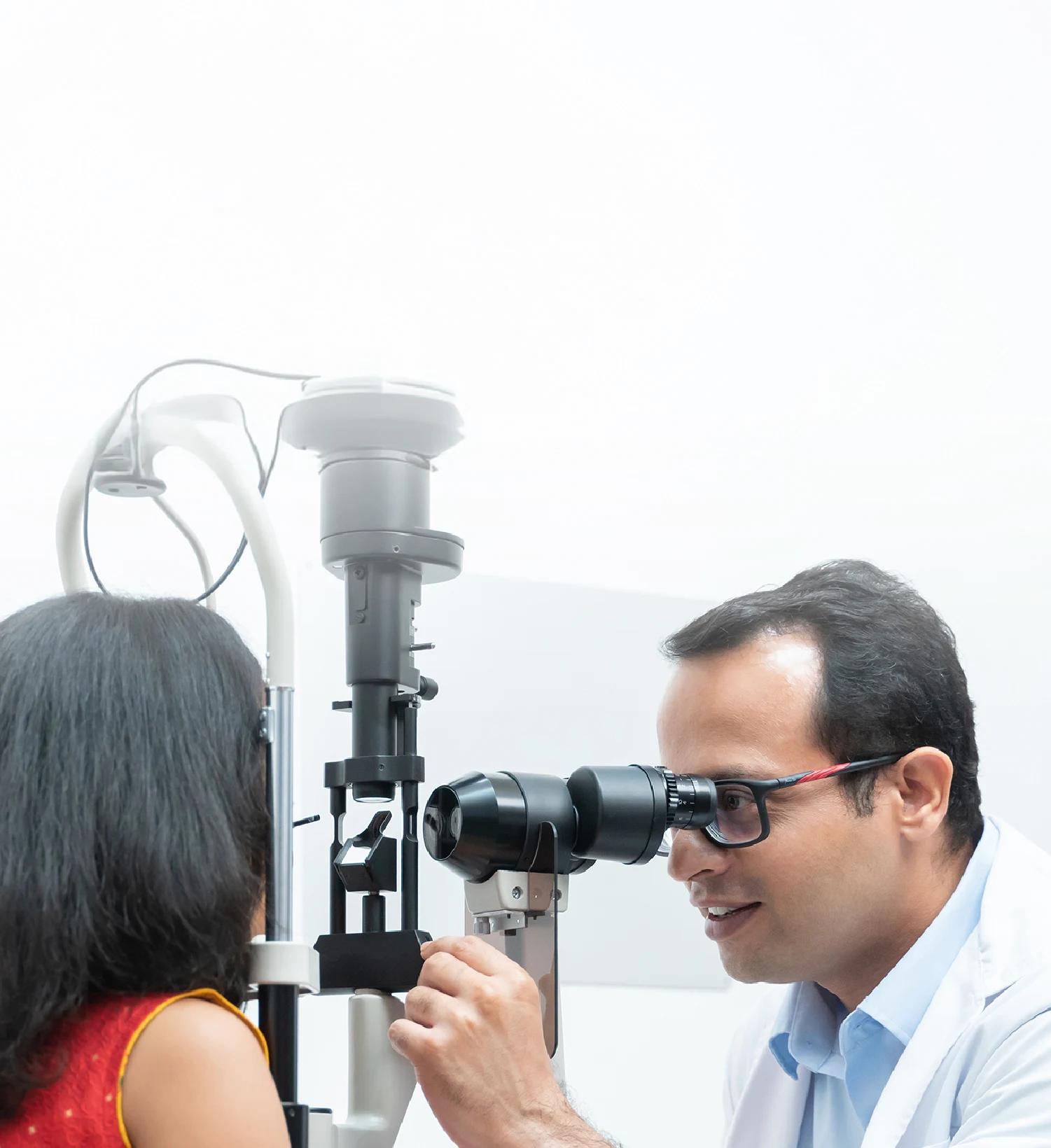
Dr. Shravya Choudhary Balla (MBBS, MS Ophthalmology, FLVPEI) is the consultant ophthalmologist at the eye clinic of GVK Health, Jubilee Hills, and specialises in cataract, retina and uveitis. Routine eye checkups, glasses checkups, retina screening for diabetes, and glaucoma tests are all done here, and cataract surgery is done as a day-care procedure.
Choosing the best ophthalmologist in Hyderabad usually comes down to one practical question: does the doctor's training match your problem? Dr. Shravya covers the lens, the retina, and inflammation inside the eye. GVK Health also has diabetologists, a rheumatologist, an NABL-accredited lab, and radiology under one roof, so blood tests, HbA1c, MRI, and CT scans can be done on the same campus.
Meet Your Ophthalmologist

Dr. Shravya Choudhary Balla
Consultant - Ophthalmologist,Cataract,Uveitis and Retina specialist
MBBS, MS Ophthalmology,FLVPEI
7 years experience
English, Telugu, Hindi
Dr. Shravya's fellowship (FLVPEI) is from L V Prasad Eye Institute in Hyderabad. Her work here covers retina evaluation and diabetic screening, uveitis, cataract assessment, and the everyday work of checking vision, prescribing glasses and catching glaucoma early. You can talk to her in English, Telugu, or Hindi.
When Should You See an Ophthalmologist?
Many eye problems give no warning until vision is already affected. Book an appointment if you notice:
- Blurred or cloudy vision, or glare and halos around lights at night
- Needing more light to read, or frequent changes in your glasses power
- A gradual narrowing of your side vision
- Dry, gritty or burning eyes, or headaches after screen work
- Diabetes or high blood pressure, even if your sight feels fine
- A parent or sibling with glaucoma
Some symptoms should not wait for a routine slot. A sudden shower of new floaters, flashes of light, a curtain across your vision or sudden loss of sight in one eye can mean a retinal tear or detachment. A red, painful eye that is sensitive to light, or sudden severe eye pain with headache, nausea and halos (a sign of acute angle-closure glaucoma), is also urgent. These need to be seen the same day.
What Happens at an Eye Checkup or Glasses Checkup
A proper checkup is more than reading letters off a chart. Depending on why you have come, a full visit usually includes:
- History: your symptoms, current glasses, medicines, and conditions like diabetes or blood pressure.
- Vision and refraction: measuring the exact power you need. This is the glasses checkup part of the visit.
- Eye pressure: tonometry, the main number tracked for glaucoma.
- Slit lamp examination: a magnified view of the lids, cornea and lens.
- Retina examination: usually after dilating drops, with fundus photography or an OCT scan if needed.
- A plan you understand: what was found, what it means, and when to come back.
Bring your current glasses, old prescriptions, a list of medicines and recent sugar reports if you have diabetes. Dilating drops blur near vision for a few hours, so it is better not to drive yourself home.
Retina Care, Retina Screening and Retinal Injections
The retina is the light-sensing layer at the back of the eye. Damage there is usually painless and has no early symptoms, which is why retina screening matters even when your sight seems normal. Dr. Shravya evaluates:
- Diabetic retinopathy and swelling of the macula caused by diabetes
- Macular disorders, including age-related changes
- Retinal degeneration
- Retinal tears and detachment
OCT scans and fundus photographs create a record that can be compared from one visit to the next, so small changes are picked up early. If you are looking for a retina specialist in Hyderabad to review an earlier report, bring your old scans along.
Some conditions, especially macular swelling from diabetes, are treated with an injection of medication into the eye. Retinal injections sound frightening, but the eye is numbed with drops first. If they are advised, Dr. Shravya will explain why they are needed and where the treatment is given.
Eye Checks for People with Diabetes
Diabetes damages the small blood vessels of the retina slowly and quietly, and by the time vision blurs the damage can be advanced. People with type 2 diabetes are advised to have a retina check when first diagnosed and then usually once a year, or as often as their doctor advises.
At GVK Health, diabetes care and eye care sit in the same building. Patients of our diabetologists, Dr. N G Sastry and Dr. Aawar Dipika Narayan, can have retina screening done here, and HbA1c tests run in our NABL-accredited lab on the same campus.
Uveitis: Eye Inflammation That Needs a Cause, Not Just Drops
Uveitis is inflammation inside the eye. It can cause redness, pain, light sensitivity, blurred vision or floaters, though some forms are painless, and at first it is often mistaken for a simple red eye. Left untreated, it can raise eye pressure, cause cataract or swell the retina.
It is one of Dr. Shravya's specialities. Inflammation at the front of the eye is usually treated with steroid drops; inflammation further back may need injections or tablets, and infection has to be ruled out first. The bigger job is finding out why it happened, since it can be linked to infections or to autoimmune conditions such as arthritis. Blood tests are done in our lab, and a rheumatologist sees patients on the same campus if the cause turns out to be autoimmune.
Glaucoma Treatment and Eye Pressure Checks
Glaucoma damages the optic nerve, usually because pressure inside the eye is too high for that nerve to tolerate. Side vision fades so gradually that most people notice only after much of it has gone, and that loss cannot be reversed. A glaucoma check here includes:
- Pressure measurement (tonometry)
- Optic nerve examination, with OCT imaging of the nerve fibre layer
- Visual field evaluation to map your side vision
- Regular follow-up to see whether pressure and nerve stay stable
Glaucoma treatment in Hyderabad is no different from anywhere else in one respect: it only works if you keep it up every day. For most people it means pressure-lowering drops, often for life, so each follow-up also checks that the drops fit your routine. Get tested if you are over 40, have diabetes, are very short-sighted, have taken steroids for a long time, or have glaucoma in the family.
Cataract Surgery and Minor Eye Procedures as Day Care
A cataract is clouding of the natural lens. It builds slowly: colours look duller, night driving gets harder, headlights spread into glare, and new glasses stop helping. No drop or tablet dissolves it. Once it gets in the way of daily life, surgery replaces the cloudy lens with a clear artificial one.
At GVK Health, cataract surgery is done as a day-care procedure, so you go home the same day without a hospital admission. Dr. Shravya assesses the lens first and tells you whether surgery is needed now or can safely wait. Two other minor surgeries are also done in our day-care unit:
- Pterygium excision: removal of a fleshy growth on the white of the eye that can creep onto the cornea.
- Chalazion removal: removal of a firm, painless eyelid lump caused by a blocked oil gland.
Dry Eyes, Screen Strain and Glasses Power
Long hours at a screen cut down blinking, and the surface of the eye dries out. The result is burning, watering, tired eyes, headaches, and vision that blurs late in the day. A slit lamp check shows how dry the surface is and whether lid inflammation is adding to it. Relief often comes from lubricating drops, a better screen setup and the 20-20-20 habit: every 20 minutes, look 20 feet away for 20 seconds.
Blurred vision can also just mean your power has changed. Short sight, long sight, astigmatism and the reading difficulty that starts in the 40s are all measured during a glasses checkup, and you will know whether glasses, contact lenses or a closer look is the right next step.
Eye Tests and Diagnostic Services
Eye services at GVK Health include these tests:
- Optical Coherence Tomography (OCT): cross-section scans of the retina and optic nerve.
- Fundus photography: photographs of the retina for comparison over time.
- Tonometry: pressure measurement.
- Slit lamp examination: a magnified view of the front of the eye.
- Visual field testing: a map of your side vision.
- Visual acuity and refraction testing.
Some problems need tests beyond the eye itself. Inflammation of the optic nerve may need an MRI of the brain and orbits, and uveitis often needs blood work. Our NABL-accredited lab, 3 Tesla wide-bore MRI, and 160-slice CT scanner are on the same campus as the ophthalmology department.
What You Get at GVK Health
- An ophthalmologist with a fellowship from L V Prasad Eye Institute (FLVPEI)
- Eye care alongside diabetes care, rheumatology, lab and radiology services at one address
- Cataract surgery as day care, without a hospital stay
- Visits in English, Telugu or Hindi
Book an Appointment
Call 040 2888 2888 to book an eye specialist in Hyderabad at GVK Health. We are at Plot No. 65, Road No. 1, Jubilee Hills, Hyderabad 500033, next to Metro Pillar C1585. If your pupils will be dilated, bring someone who can drive you home.




Frequently Asked Questions
Medically reviewed by Dr. Shravya Choudhary Balla, Consultant Ophthalmologist.